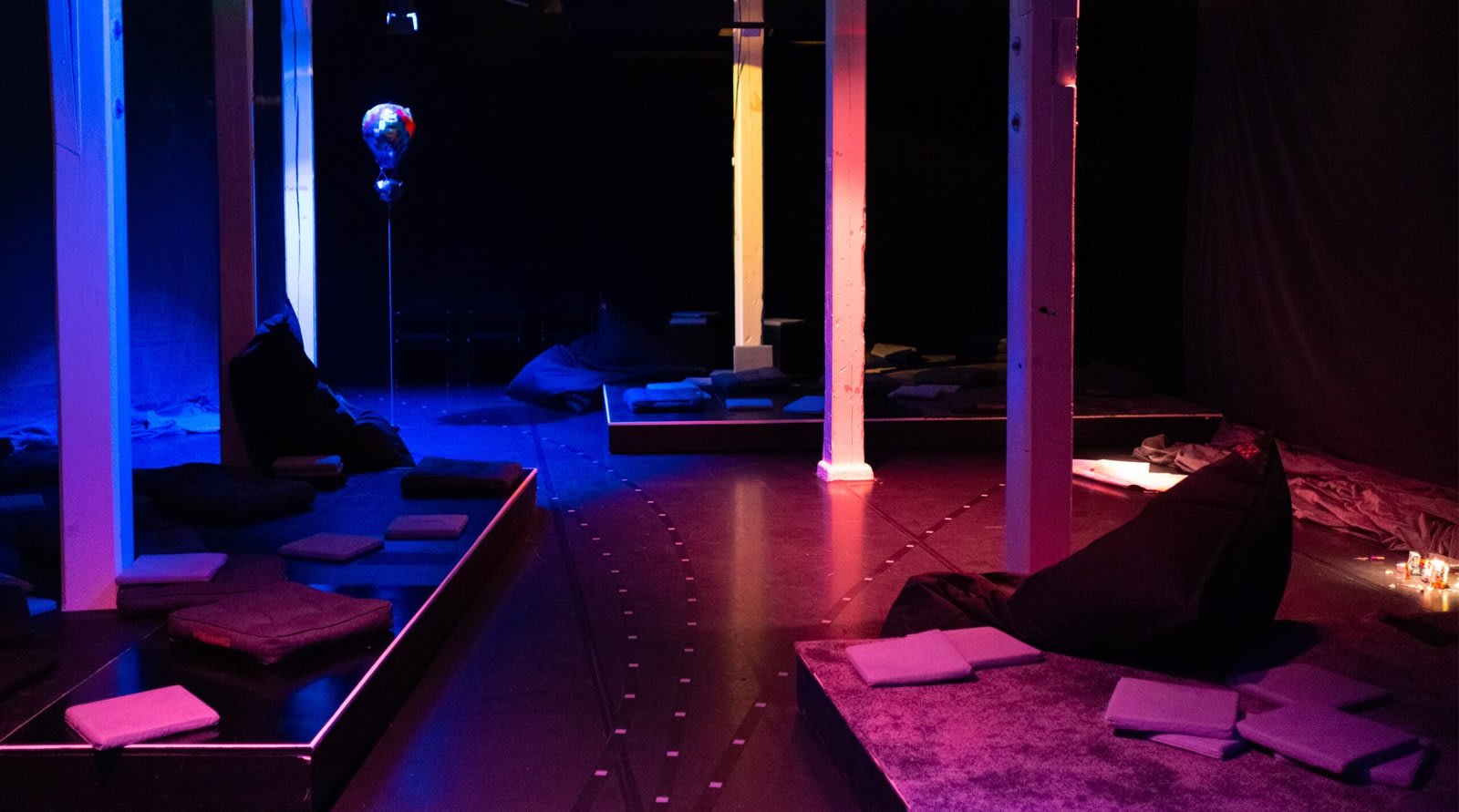
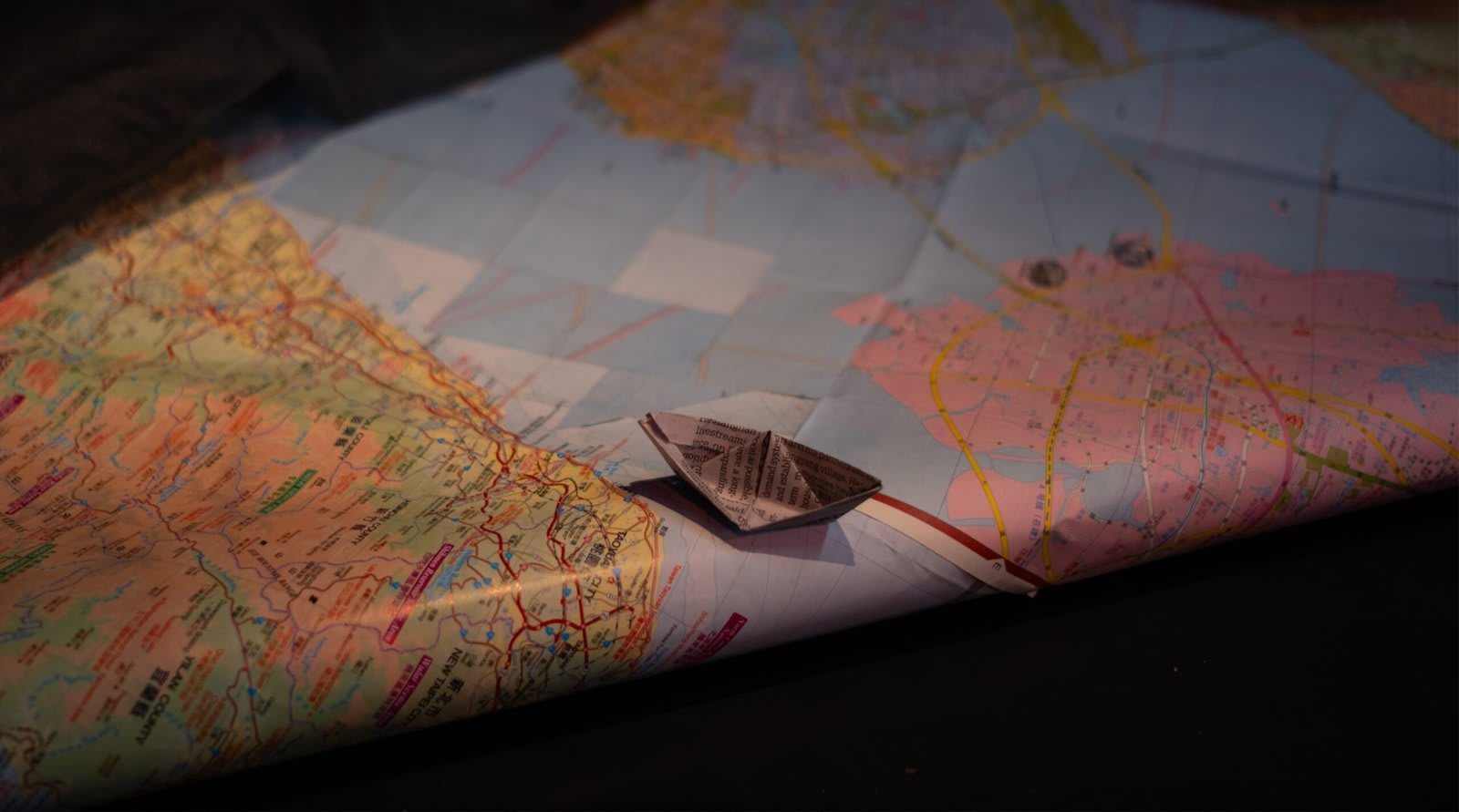
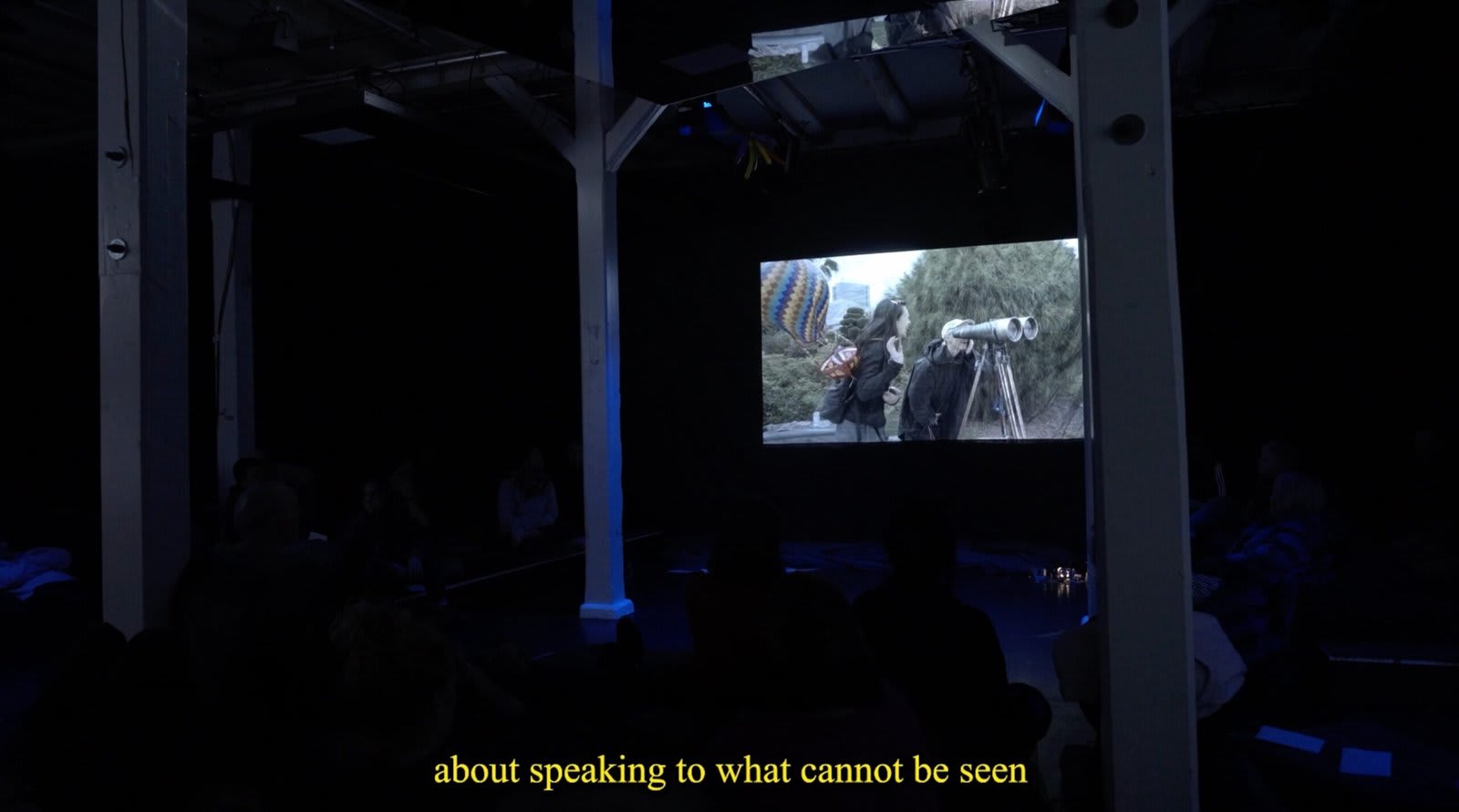
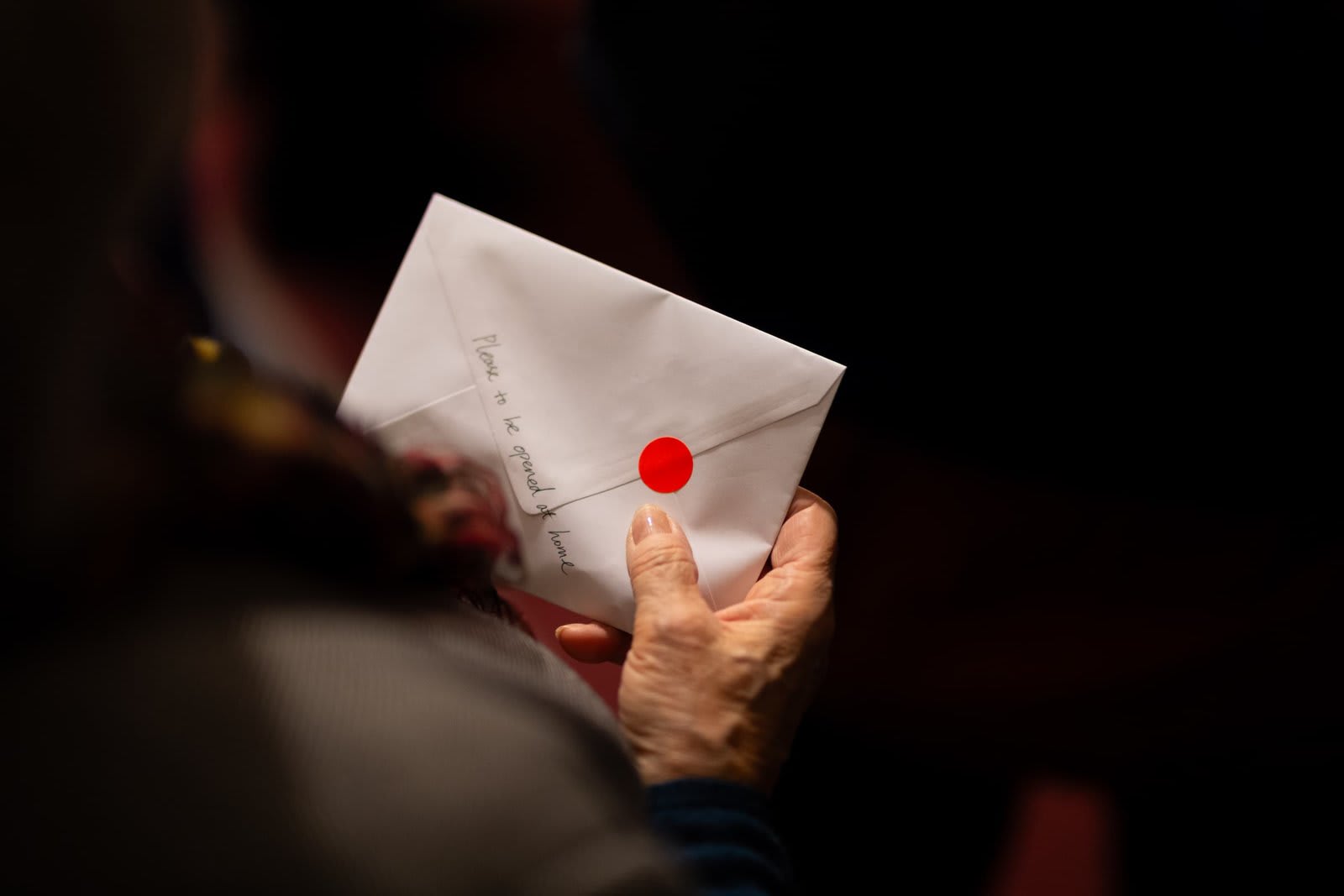
Upon entering the Theaterhaus Gessnerallee, I was handed a sealed envelope. The colored sticker affixed did not suggest a traditional theater seating grid but instead assigned me to one of three low, rectangular platforms scattered across the dark, open floor. Each platform was furnished with cushions and varied objects such as a balloon, a spent firework casing, or a crumpled pack of cigarettes. In one corner of the room, a map spliced together—one part labeled in Simplified Chinese, one in Traditional—sat on the ground. Climbing onto my platform, I understood that I was to remain on this “island” for the duration of this evening with the RRRRRR Collective, whose six members were dispersed among the audience, sitting as quiet and still as the rest of us in the dark. I was unable to cross to the other two platforms, a prelude to more entrenched rifts.
This event was part of Open Studio, a format initiated by sound artist and scenographer Dimitri de Perrot wherein he invites others to develop new work within his own, as a shared framework. The RRRRRR Collective is six people operating from distinct geographies: artists Wen-Chi Liu (Taipei) and Keng Chen (Hangzhou and Shanghai) along with artist Dino Radoncic (St. Gallen, Switzerland), artistic duo Nathalie Stirnimann and Stefan Stojanovic (Zurich), and director and playwright Eneas Prawdzic (Zurich). Rather than collapsing the thousands of miles between them with digital tools, the members deliberately chose to inhabit the gaps, defining their process with fragmented, transborder exchanges and the refusal to work in unison. The spatial arrangement I’d entered echoed their methods.
This performance, Wen Keng We Meet?—On Connection, explored not just abstracted gaps but a specific, physical one: the narrow waterway between Kinmen, an island administered by Taiwan, and Xiamen, a city in China visible from only ten kilometers away. The two shores may be close enough to see yet geopolitics make it nearly impossible to cross freely; each side comes to know the other mostly through speculation. The work highlights the paradox that the closer two geographies sit physically, the more violently their underlying differences can manifest. This is literalized with the split map on the floor rendering cartography not merely as administrative but epistemological.
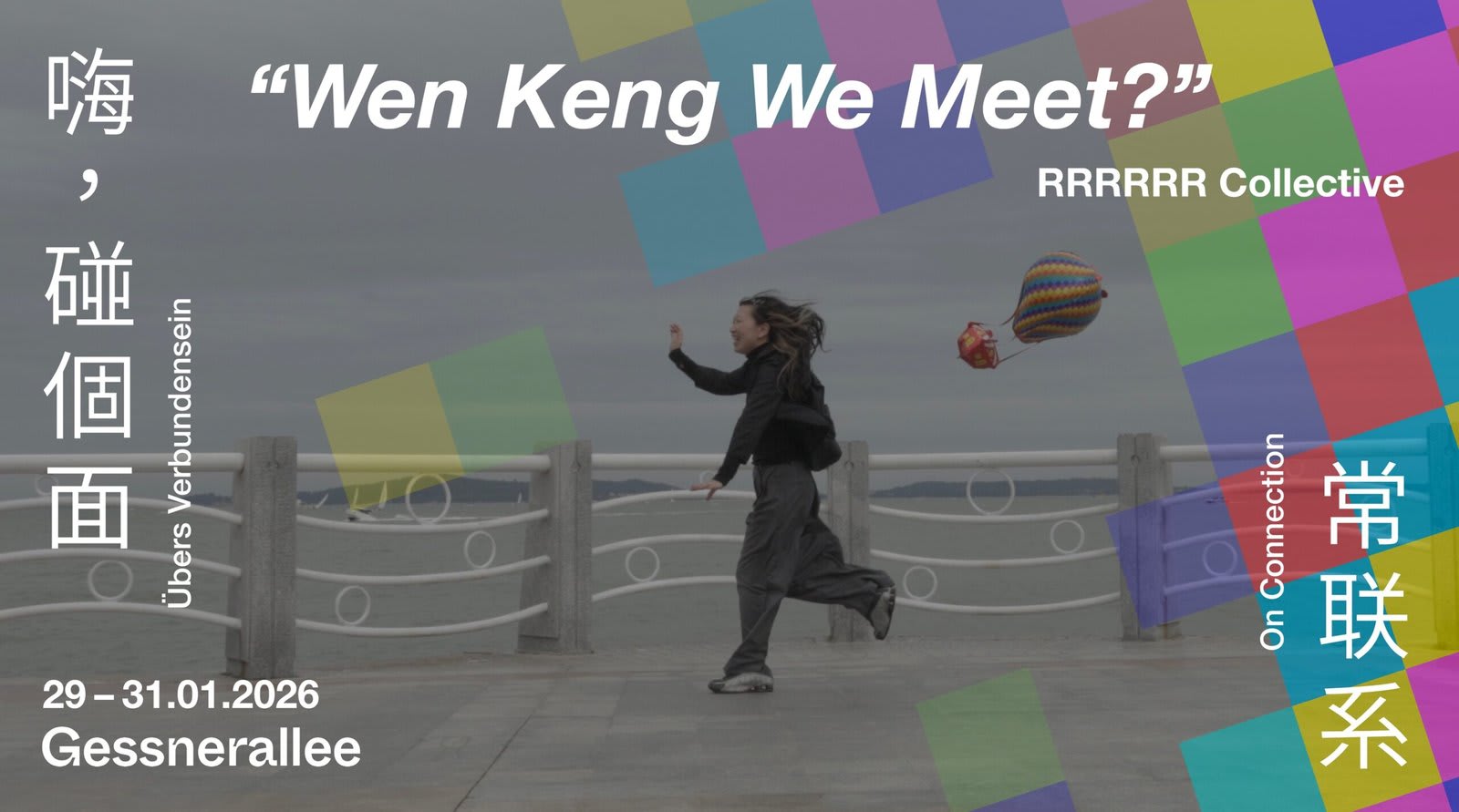
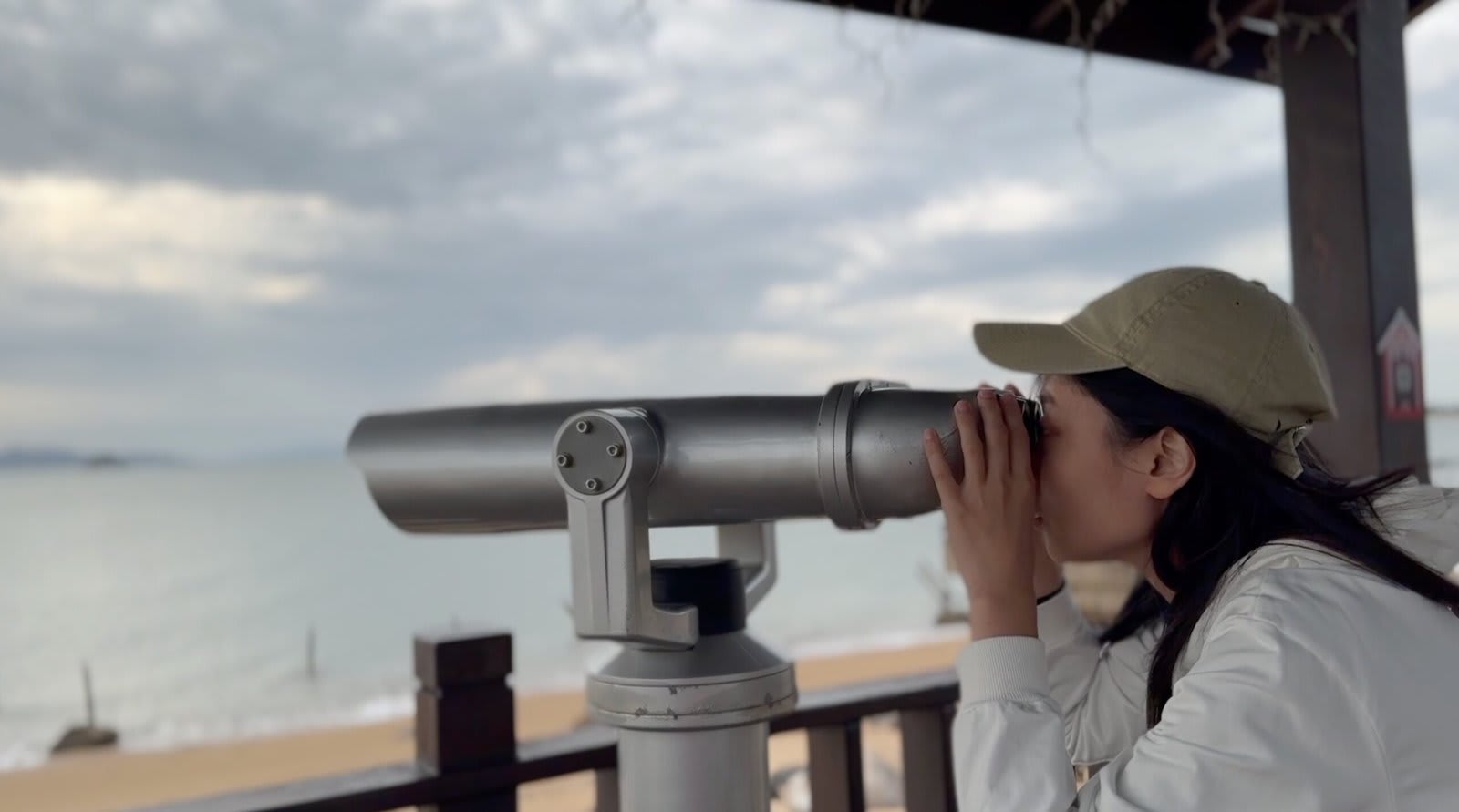
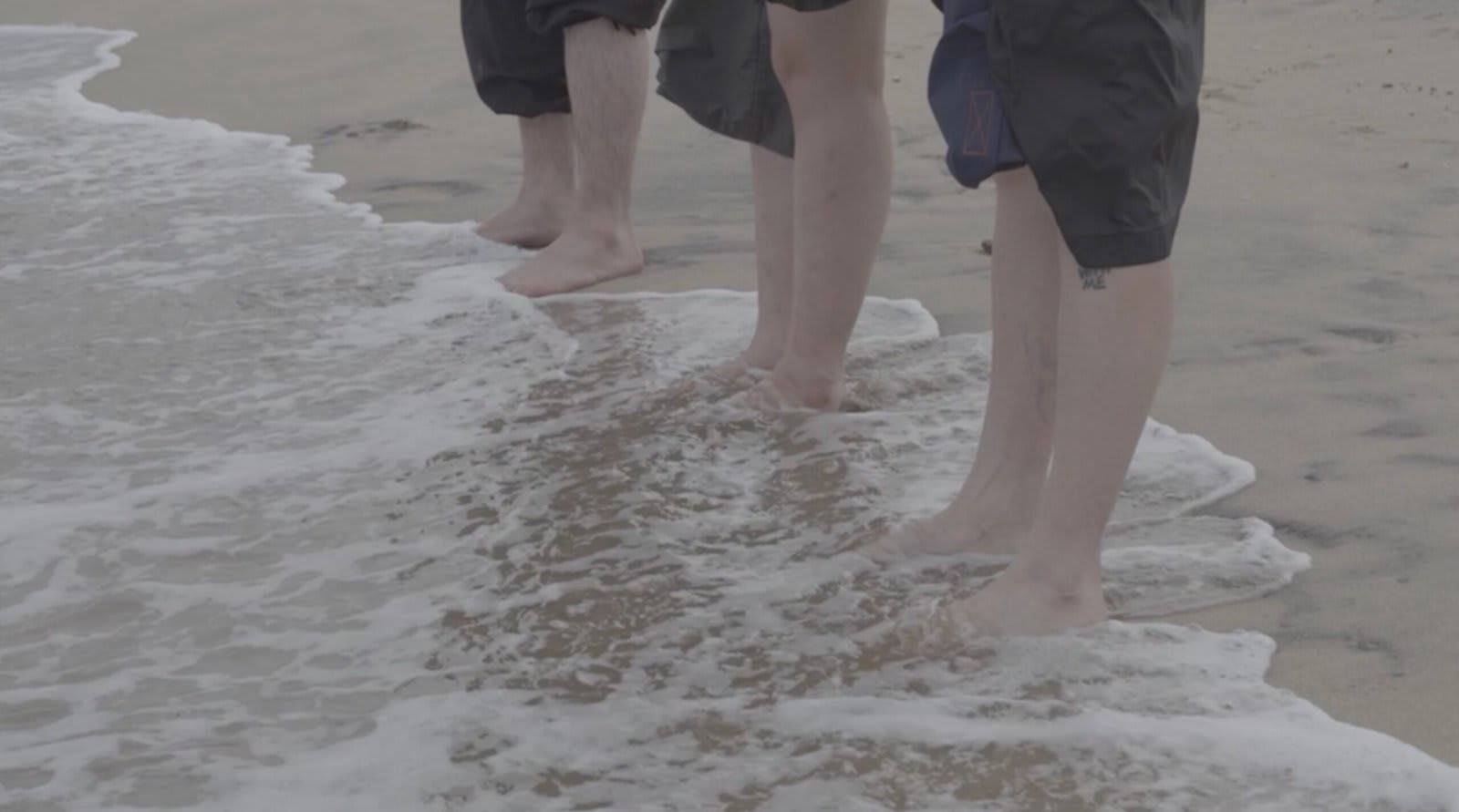
A spoken narration weaves throughout the space, following alongside but not exactly tracking with two video projections of footage cutting between the two shores but not settling on either one. Wen-Chi is shown standing on the Kinmen side of the water, peering through the kind of binoculars familiar at tourist destinations. Through the lenses we’re shown that she can clearly make out everything from the warning label printed on a discarded pack of Double Happiness (囍) cigarettes to the operating instructions etched onto the binoculars themselves. Intercut with this, Keng, Nathalie, and Stefan are seen standing at the water’s edge in Xiamen. Unable to spot Wen-Chi with the naked eye, Keng straps a balloon to her back and runs along the shoreline using it to signal back across the water toward Kinmen. But as Wen-Chi aims the lenses at Xiamen, the shore gives back nothing she can read. An online map showing their positions and a phone line connecting the whole team kept cutting out.
Philosopher Jürgen Habermas described the “ideal speech situation”: two parties communicating on equal terms without coercion or systemic distortion. But in this geography where tech glitches and locations become a blur, no such condition is offered. The RRRRRR Collective lets these failures to connect run their full course, unedited. Underneath their narration, which slips in and out of their own unscripted conversation on the shore, the field recordings were left un-scrubbed, wind and passersby’s murmurs blending in. The members’ own accents were left intact: non-native English shaped by mother tongues and Wen-Chi’s and Keng’s Mandarin diverging in accent and idiom despite sharing the language. The audio slides between English, Mandarin, and German, leaving a narrative that never quite resolves into something an audience can immediately follow.
Part of the work’s resonance lay in de Perrot’s audio-visual scenography: Sound was architecture, and a listener’s body the site through which meaning was negotiated. Each of the platforms, de Perrot explained, was scored differently. The same content reached every island, but the audio was mixed to sound either close by or more distant depending on one’s designated position. Watching from my assigned island, I found myself trying to read the postures of others in the audience—a lean forward, a held breath—wondering if they were catching more or less than I. Listening here became laborious, parsing voices versus wind noise as a form of participation that amplified this encounter itself as an event, with the artwork and physical site of reception as inseparable. This was magnified by the mirrors suspended against the ceiling facing downward above each island. When I looked up and saw myself among the others, all of us sitting cross-legged, I was reminded that I was not a participant inside the narration but a spectator. This is the performance’s provocation: If I am only watching, then everything I am taking in—the distance, the effort to connect—reaches me only through someone else’s telling.
As the narration continues, Keng recalls her father watching Taiwanese television through a broadcast signal that happened to reach him across the strait—seeing what he could never visit, only imagine. Perhaps this was the collective’s central argument, that we can only ever approach the Other through imagination, not information, projecting stories into the distance between us. If communication is to be worked for, narrative keeps us occupied in the meantime, the same logic of Keng’s father piecing together a portrait of life on the other side of the water.
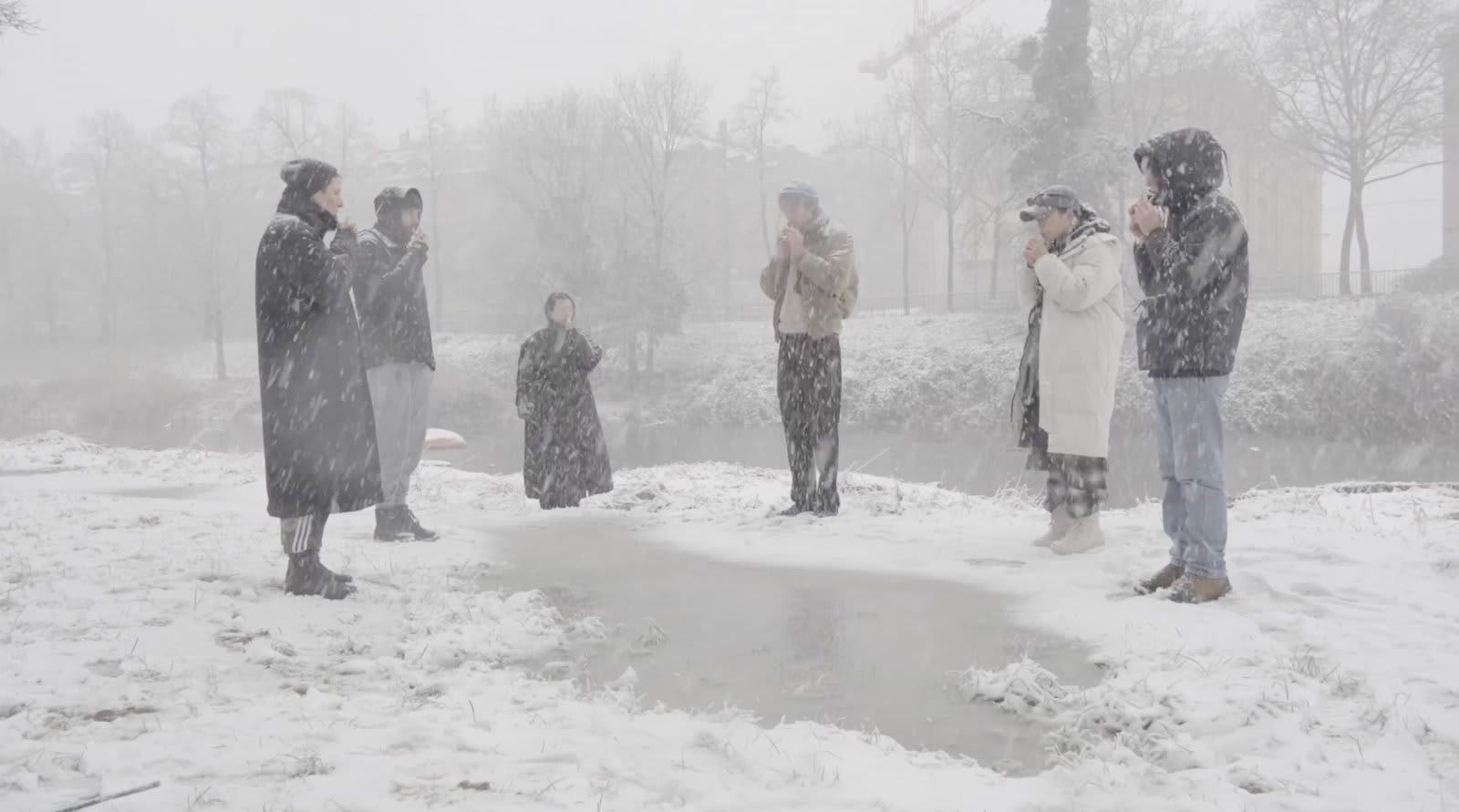
Despite efforts at nearness, the RRRRRR members on screen eventually “saw” each other from afar. The audience heard that Wen-Chi had bought fireworks in Kinmen, setting them off across the strait into the night sky. At one point, the video changed to show snowy Zurich—footage shot when all six members finally gathered in person—then, the actual performers who had been seated on three of the constructed islands stood up and formed a chorus of bird whistles. Wen-Chi’s fireworks reached the audience through the audio track while the whistling happened live alongside us. While Habermas envisioned a system where information circulates without friction and communication appears efficient, this performance suggested that something is clarity isn’t everything. Here, under conditions of noise and misalignment, true listening became possible precisely because we do not connect by overcoming interference but by remaining within it.
這場演出是「開放工作室」(Open Studio)系列的一部份。該系列由聲音藝術家兼舞台設計師迪米特里・德・佩羅(Dimitri de Perrot)發起,他邀請其他創作者在自己設計的劇院框架內共同發展新作品。RRRRRR Collective作為受邀藝術團體,由六位來自不同城市的成員組成:藝術家劉文琪(台北)、陳鏗(杭州/上海)、迪諾・拉多齊奇(Dino Radoncic,瑞士聖加侖)、藝術家雙人組娜塔利・斯蒂爾尼曼(Nathalie Stirnimann)與史蒂凡・斯托亞諾維奇(Stefan Stojanovic,蘇黎世,以及導演兼劇作家埃內亞斯・普拉德齊奇(Eneas Prawdzic,蘇黎世)。他們並未選擇使用數位工具來彌平彼此之間數千英里的距離,而是刻意適應這樣的距離,以碎片化、跨地域、非同步的交流方式,定調他們的創作過程。我所進入的劇場空間佈局,正呼應著他們的創作方法。
這場名為《Wen Keng We Meet? — On Connection》的演出,探討的不僅是抽象的距離,更是具體的地理距離。金門與廈門之間那條狹窄的水道,相隔僅有十公里。海岸兩端近得可以望見彼此,但地緣政治卻使自由往來幾近不可能;多數時候,雙方只能透過猜想來認識彼此。這件作品突顯了一個悖論:兩個地理位置實體上越接近,深層的差異有時反而表現得更為劇烈。地面上那張分裂的地圖,具象化了這點——製圖學不僅是行政上的區分,也是認知的差異