Illuminated by over 300,000 square feet of LED digital screens amidst the buzzing swarms of tourists, commuters, and passersby, a crowd gathers and encircles two separate grids of three-by-three-foot squares outlined in white. Despite the spectacle that is Times Square, the performance begins with little fanfare. Two young white bros break off from the crowd and take their place in the lower quadrant of each grid. They are unassuming, each wearing a grey T-shirt, navy blue basketball shorts, noise-canceling headphones around their neck, and a backpack, while sporting the same mid-calf white socks slid into tan Birkenstock slippers. From the moment the two assume their respective positions, they move in sync. They push back their shaggy blond hair with their chunky white sunglasses, peer out toward the audience while eating bags of Lay’s potato chips, and even sniffle in unison.
City-Sanctioned Mimicry
Maia Chao at Times Square Arts
Review
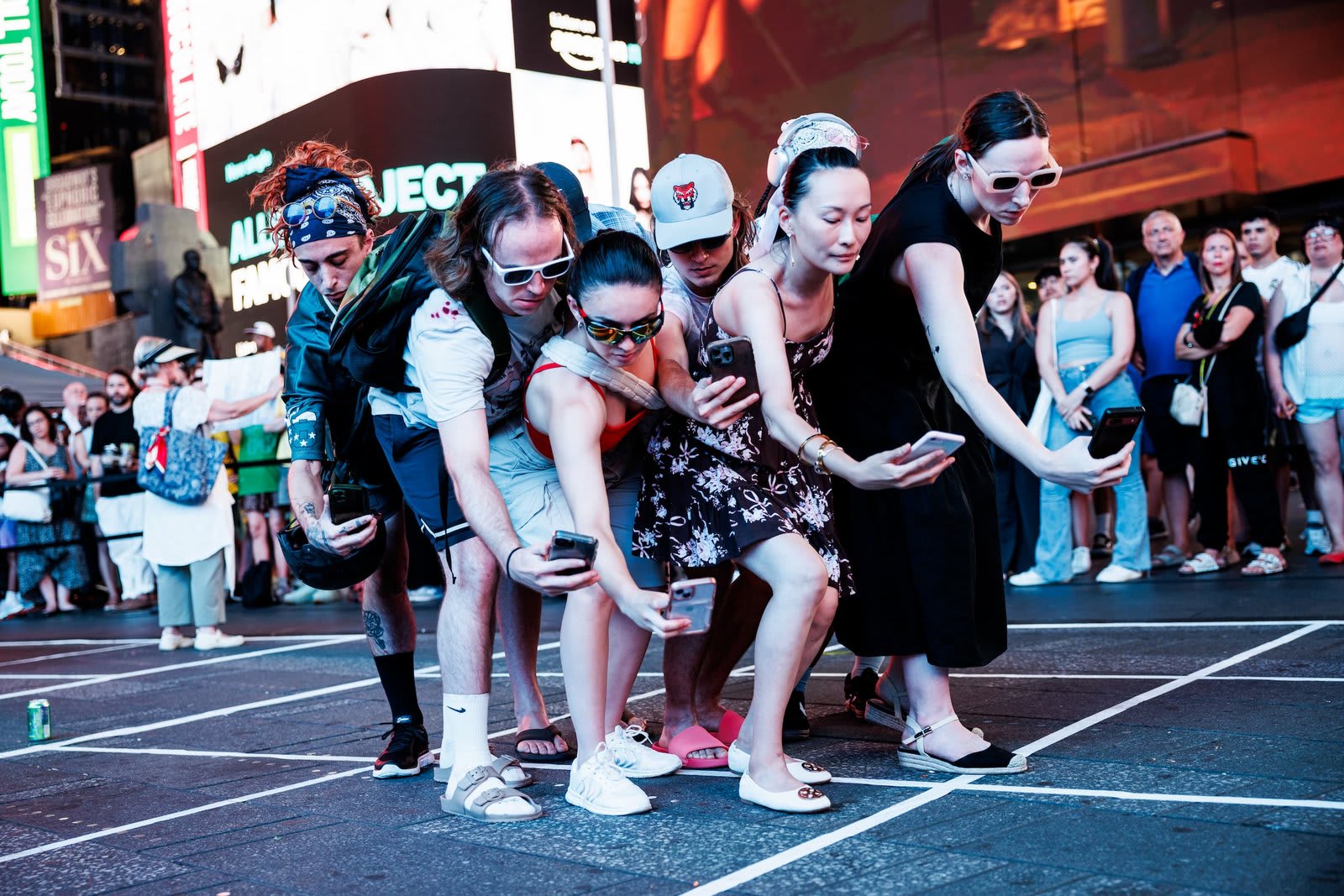
Maia Chao, American Idle, 2025. Second iteration performed in August 2026 at Times Square Arts, New York City. Photo © Maria Baranova
As new performers arrive in sets of two, they each take their place on one of the grids, mirroring the placement of their partner. Each pair embodies a distinct archetype, ranging in age from eight to seventy-five: a lost, older Karen-type tourist fidgeting with a physical map below her visor; a socialite standing in Tory Burch flats, adorned with Cartier bangles and oversized sunglasses bemoaning anyone in her way; a nonchalant club kid engrossed in their phone, ignorant of onlookers; and a grade school-aged girl in a bright cheer outfit skipping merrily across the grid.
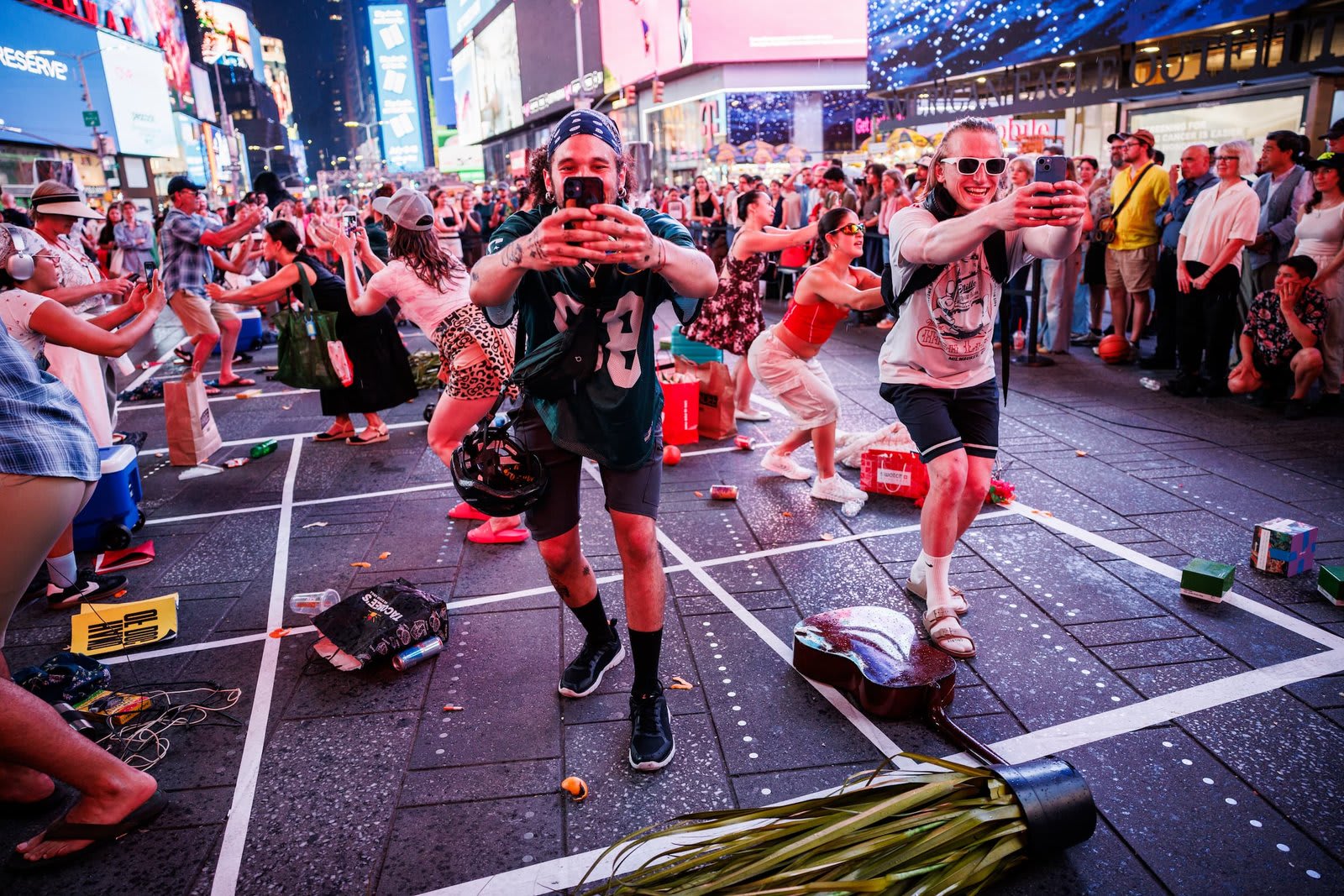
Maia Chao, American Idle, 2025. Second iteration performed in August 2026 at Times Square Arts, New York City. Photo © Maria Baranova
The culmination of Maia Chao’s three years as artist-in-residence at Times Square Arts, American Idle is an hour-long live performance brimming with references of high- and lowbrow appeal. A nod to early-aughts competition TV show, American Idol, the title itself is a cheeky play on words. Chao’s interest in the performance of everyday life shifts expectations away from the spellbinding vocals that might propel a singular talent to stardom and instead orients the audience’s expectations toward a collective acclaim of the mundane. American Idle reflects Chao’s longer practice and almost anthropological study of how infrastructures dictate how we move and why. Choreographed by Lena Engelstein and styled by Lily O’Neill, the twenty performers enact seemingly ordinary gestures that become remarkable through repetition, exaggeration, and synchronization. While the work is theatrically arranged, the chosen archetypes and related gestures are familiar to the audience, easily blurring the boundaries between performer, onlooker, and pedestrian.
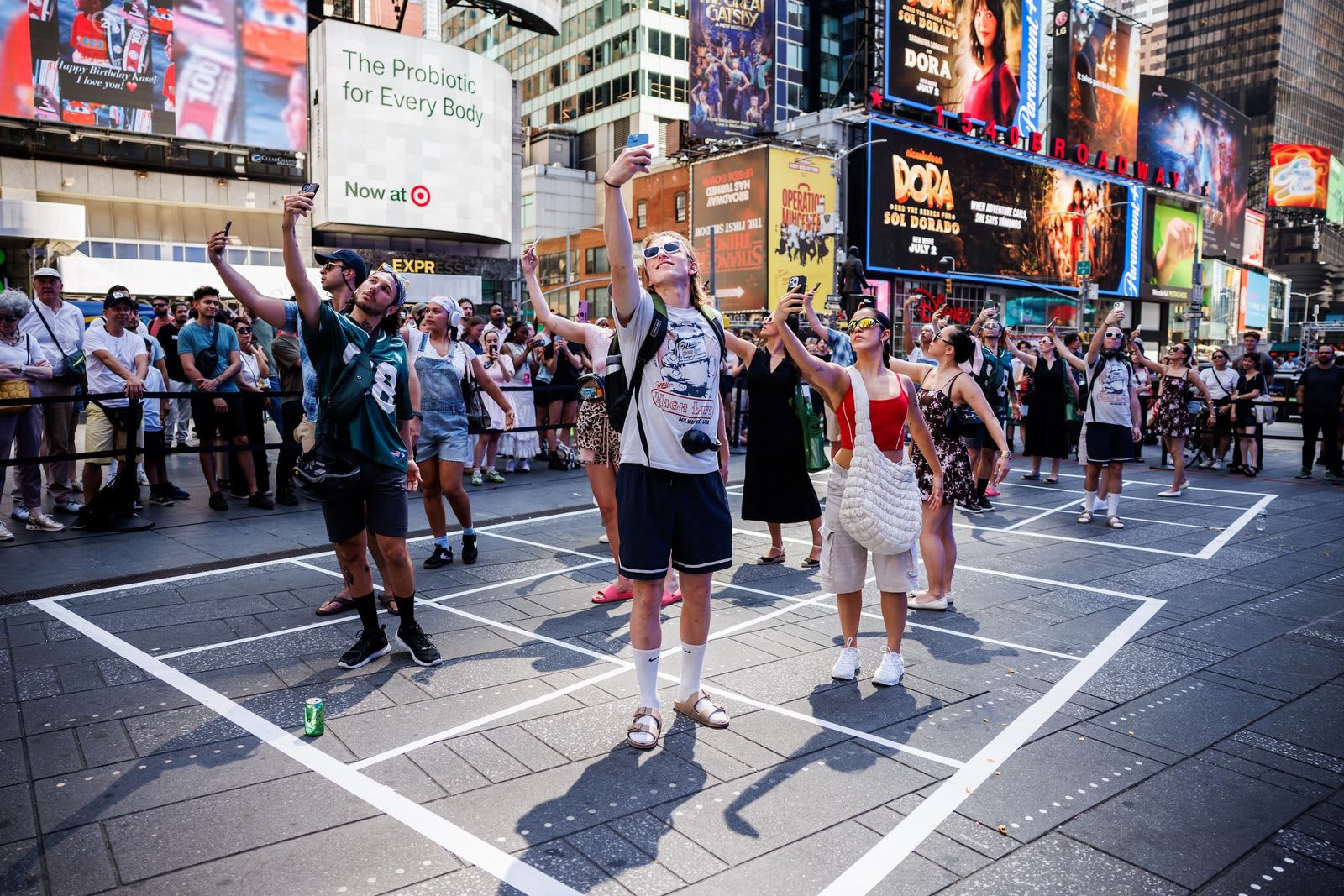
Maia Chao, American Idle, 2025. Second iteration performed in August 2026 at Times Square Arts, New York City. Photo © Maria Baranova
The performers initiate the first act “twinning” beyond their matching attire. They are thoughtfully cast and choreographed to resemble each other’s mannerisms and essence––and in the instance of the youngest two, Nyeema Raynn and Natalia Heaven Dimitriou, some are actually twins. This visual device evokes the twin emoji while recalling other instances of twins-as-mirror in art, such as Frida Kahlo’s Las Dos Fridas (1939)1In the collection of the Museo de Arte Moderno, Mexico City. https://www.britannica.com/topic/The-Two-Fridas or Richard Kriesche’s installation Zwillinge (Twins) (1977).2See the work here in the collection of the Museum Moderner Kunst (mumok), Vienna: https://www.mumok.at/en/online-collection/detail/zwillinge-2729; see here for a description of Zwillinge: https://www.frieze.com/article/data-doubles-self.
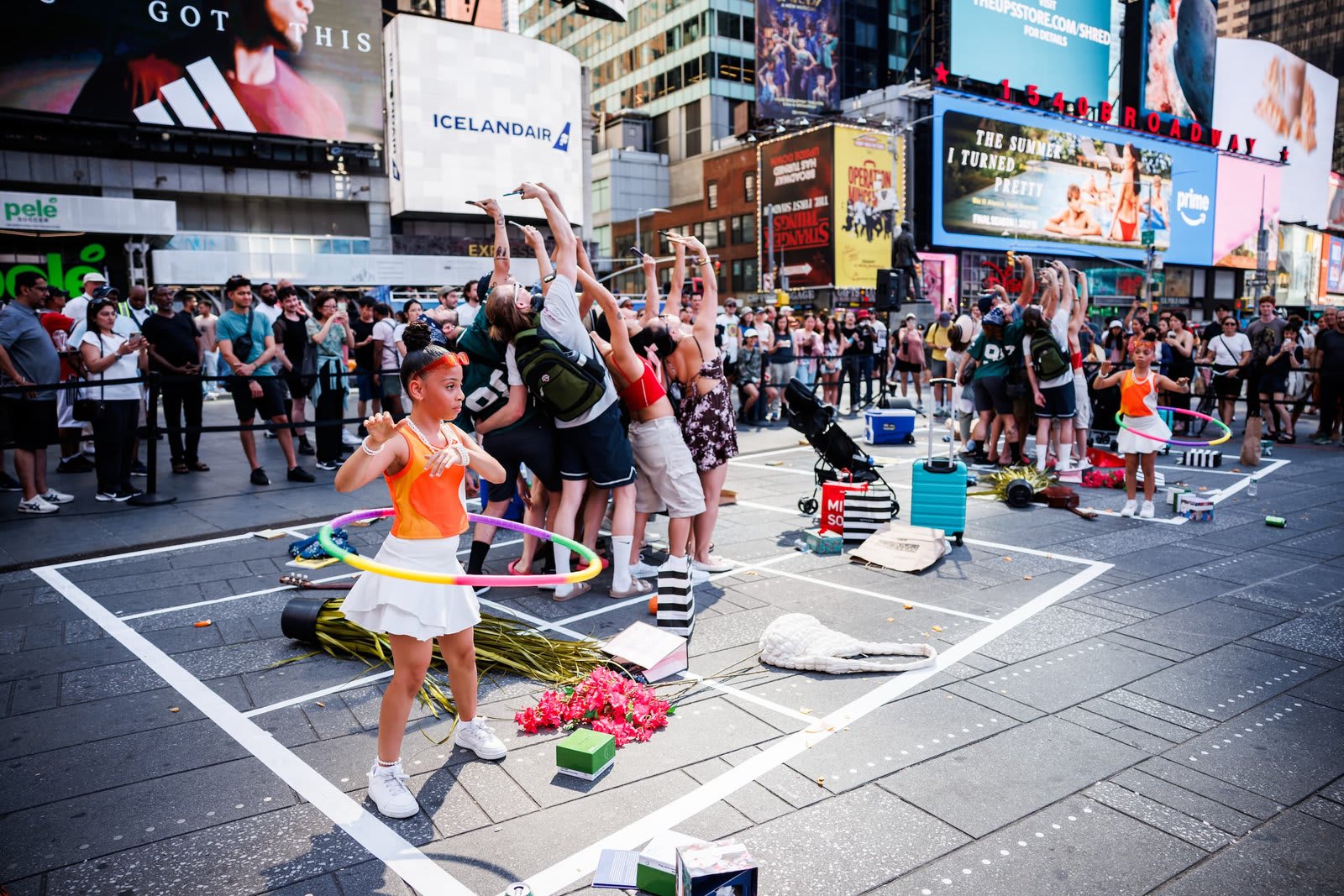
Maia Chao, American Idle, 2025. Second iteration performed in August 2026 at Times Square Arts, New York City. Photo © Maria Baranova
Beyond a game of Tic-Tac-Toe, the grids also reference aspects of modernism and legacies of performance art. They offer a container and score for the performer, similar to the way in which a three-dimensional cube’s vertices and edges order the movements of Trisha Brown’s 1975 Locus.3See here for a performance of Locus: https://vimeo.com/193976934; see here for one of several of Brown’s preparatory sketches in the collection of the Museum of Modern Art, New York: https://www.moma.org/collection/works/184698. In Chao’s piece, however, the edges are interlocking and dynamic. As we enter the second act, the performers move more gregariously, interacting with each other to take a selfie, exchange glances, and face off with their counterparts. The audience is thoroughly engrossed by their movements and the layered soundtrack of pop music, ethereal beats, and sampled audio composed by Ryan Gamblin. Far from proscenium viewership, the audience is ever-evolving, with those at the edges turning over and rejoining the passing traffic while others remain completely entranced, their attention unflinching. They record, gawk, laugh in delight, sway to the track, and field each other’s reactions.
The third act commences with the introduction of props from the sidelines: a comically tall fake plant, a basketball, a guitar, a hoola-hoop, a can of Red Bull, shopping bags, and a lineup of wheeled objects from suitcases to coolers. The choreography amps up as one performer dribbles a basketball while holding onto fake flowers and another squirts outrageous amounts of contact solution into her eyes. This is when the sound is most cinematic: A low unnerving drone mixed with carnival-esque music scores these absurd actions when the performers subtly begin to move in reverse, before eventually coming to a complete halt. Their frozen poses shatter at the sound of a foghorn, causing them to drop all their props at once.
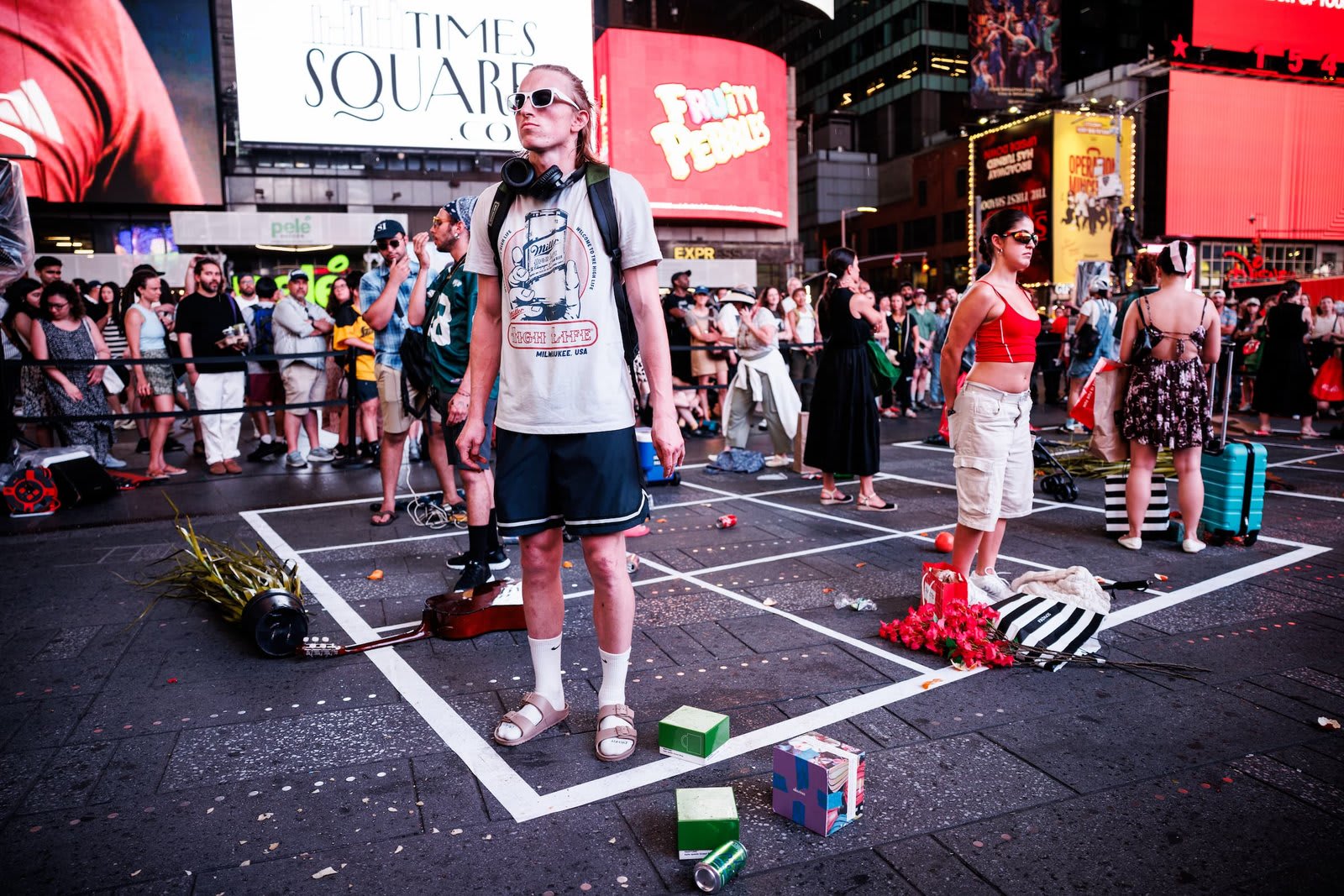
Maia Chao, American Idle, 2025. Second iteration performed in August 2026 at Times Square Arts, New York City. Photo © Maria Baranova
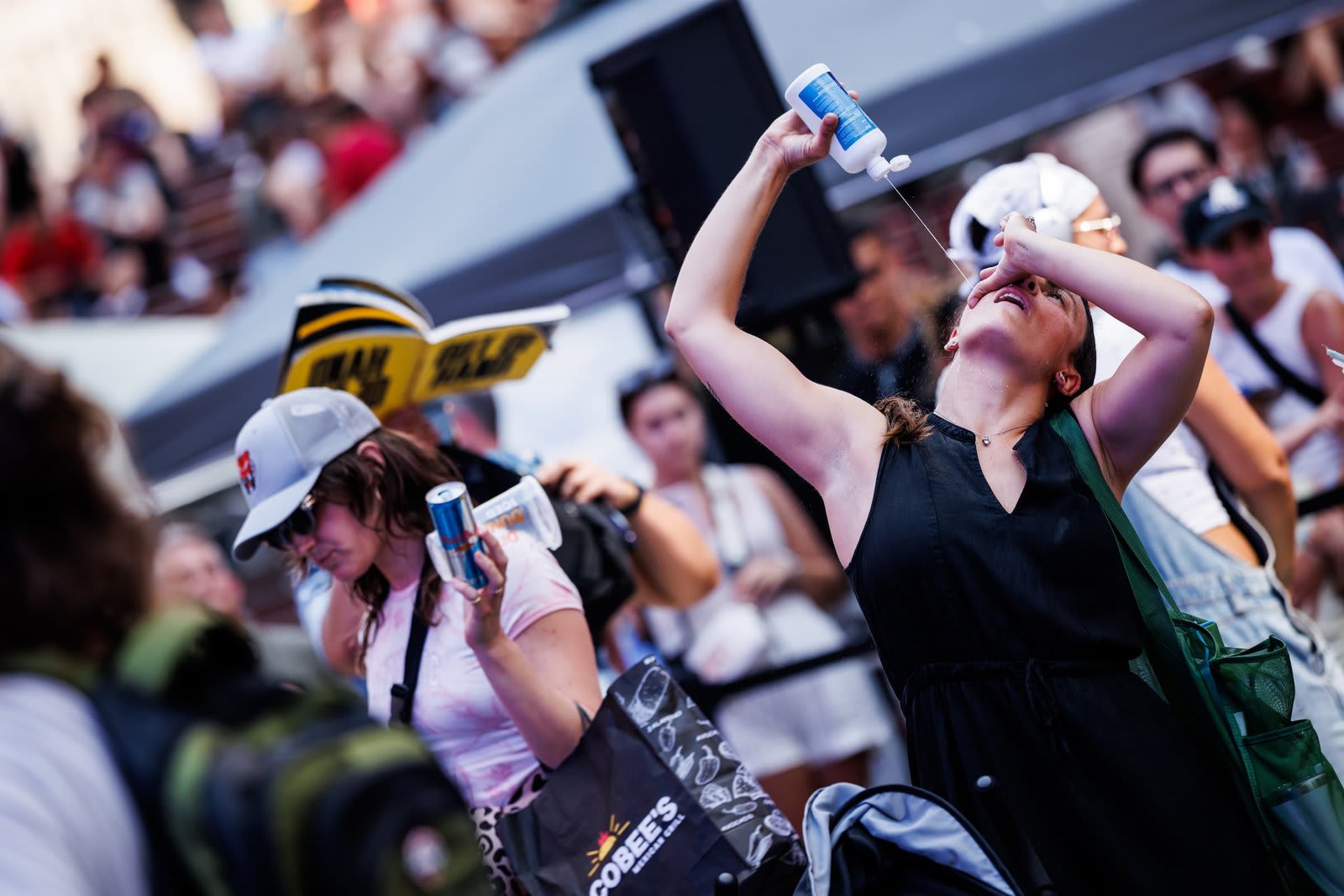
The pace of the performance continues to build. Each grid’s cast steps to the center of their stage in one dramatic sweep, cell phones in hand, arms outstretched in unison. The two clusters aim their phones upward, reaching toward the sky before slowly and ceremoniously lowering them to the ground. Nearly all the performers are wearing sunglasses even though it’s well past dusk, making the collective motion feel all the more surreal. This scene echoes the well-known LIFE magazine photograph that later became the iconic book cover of Guy Debord’s 1983 edition of Society of the Spectacle, featuring a large audience wearing 3-D glasses facing the same direction. In American Idle, the sunglasses shroud the performer’s gaze while somewhat depersonalizing their distinct personas, exaggerating what many in the audience have enacted throughout the production, behind cell phones poised to shoot and capture the commotion. Suddenly, everyone in the grid points their attention and their own phone cameras at the audience, breaking the fourth wall. They watch us watch them, an exchange that, within the heavily surveilled blocks of Times Square, already occurs long before the performance.
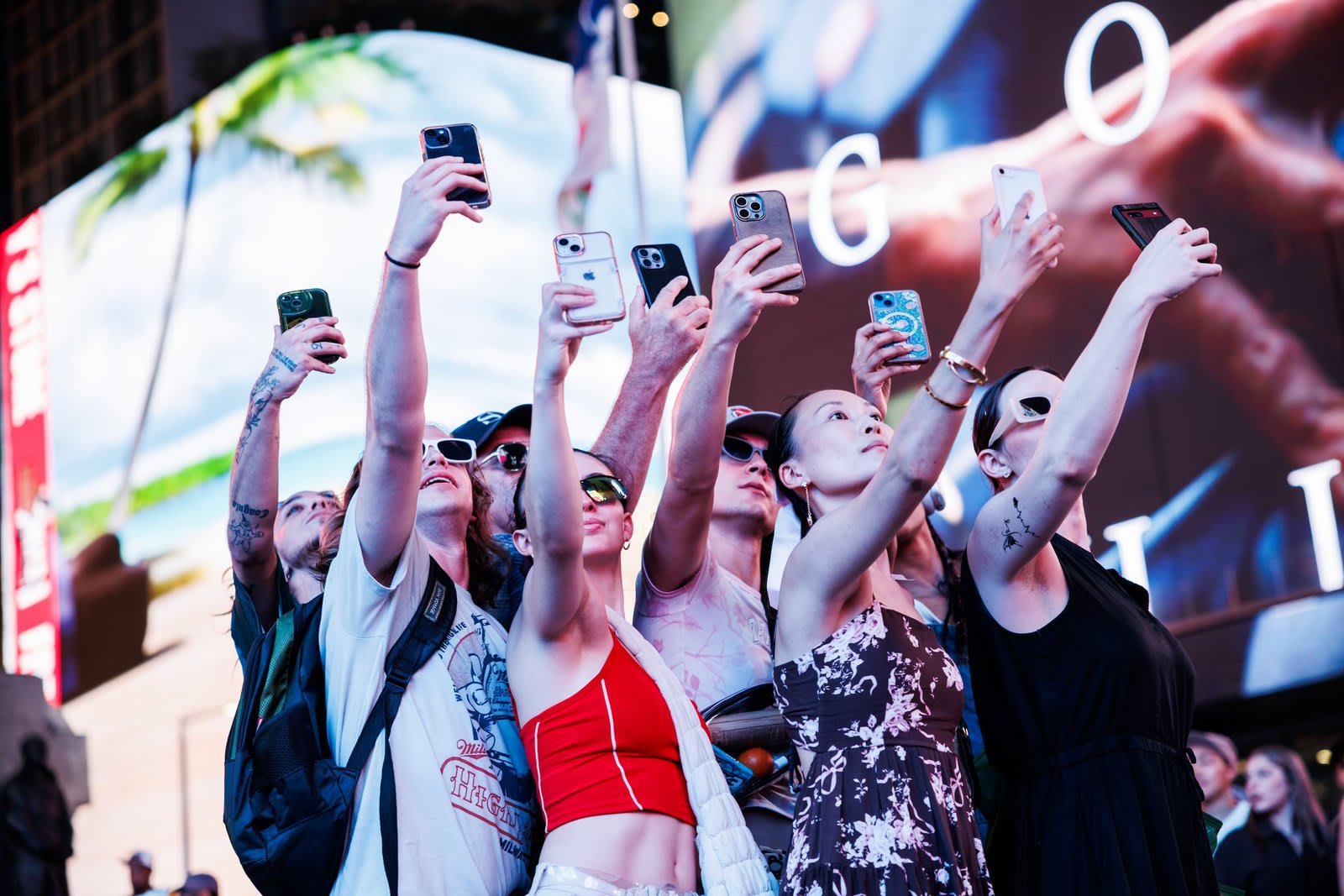
Maia Chao, American Idle, 2025. Second iteration performed in August 2026 at Times Square Arts, New York City. Photo © Maria Baranova
Emphasized by the stacked, bright, and garish advertisement screens that surround Times Square, American Idle adds yet another “screen” to this cacophony. In some instances, the performers’ movements and poses replicate those in the commercials projected above them. The proximity heightens the theatrics even more, as the characters mimic both the everyday movements of the general public and the exaggerated behavior of commercial actors. The fluid incorporation permeates the uncanny feeling that seems to get at the crux of Chao’s critique.
Suddenly, as if coming out of a trance, the performers begin to break from their mirrored pairings. Freed from their separate grids they come together as a larger group, magnetized by a rendition of the annual New Year’s Eve midnight countdown in Times Square. But the clock never strikes. Performers chant “3, 2, 1…” only to follow with an outlandish composition of random numbers. Yet, still embracing the spirit of the ball drop and the tune of “Auld Lang Syne,” they break into a shared outburst as they excitedly cling to and console each other. One performer, as if out of an overwhelming desire or narcissistic tendency, makes out with their doppelgänger. Another transforms themselves into a fountain, spitting out water in a steady stream, while another reclines unconcernedly on the ground.
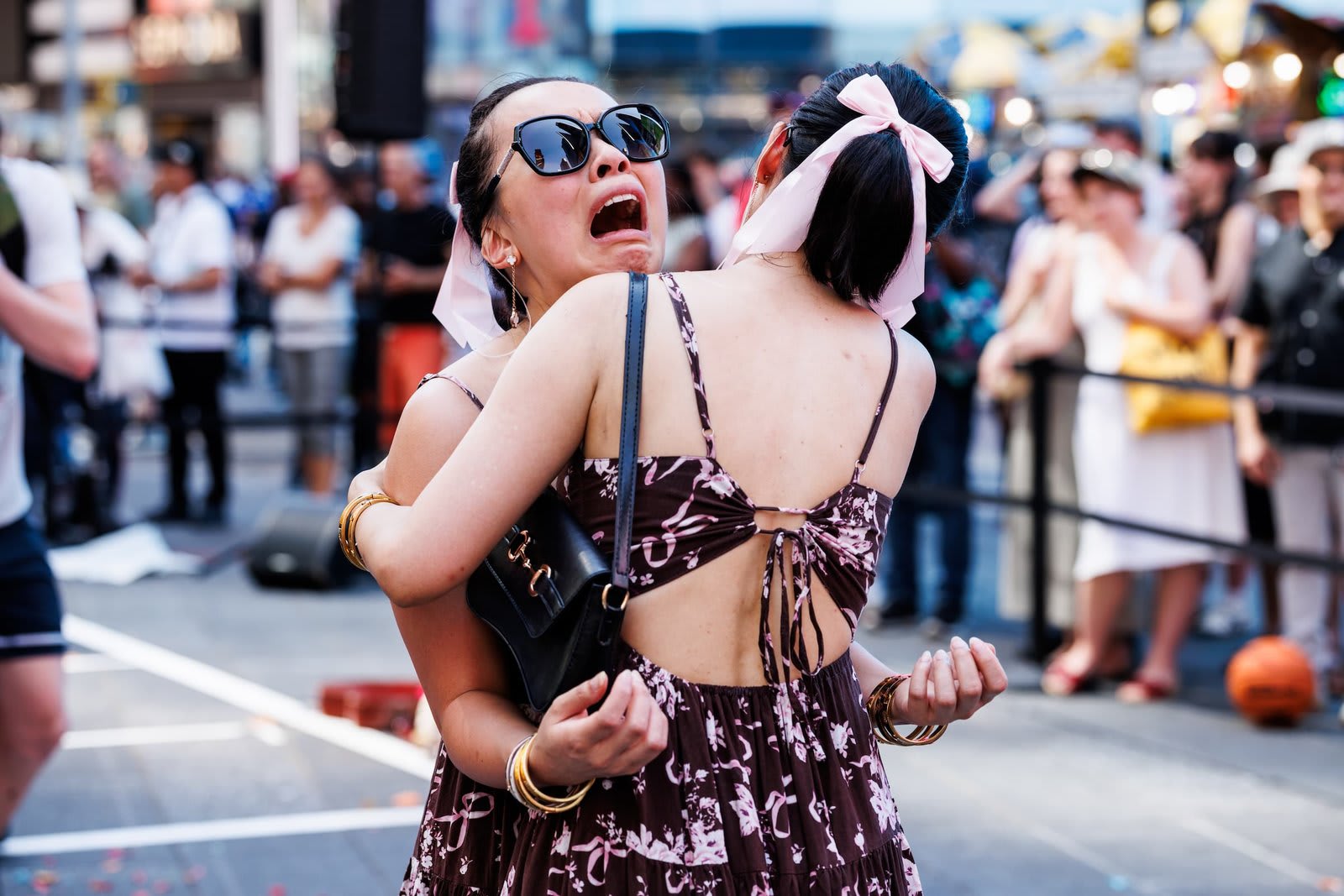
Maia Chao, American Idle, 2025. Second iteration performed in August 2026 at Times Square Arts, New York City. Photo © Maria Baranova
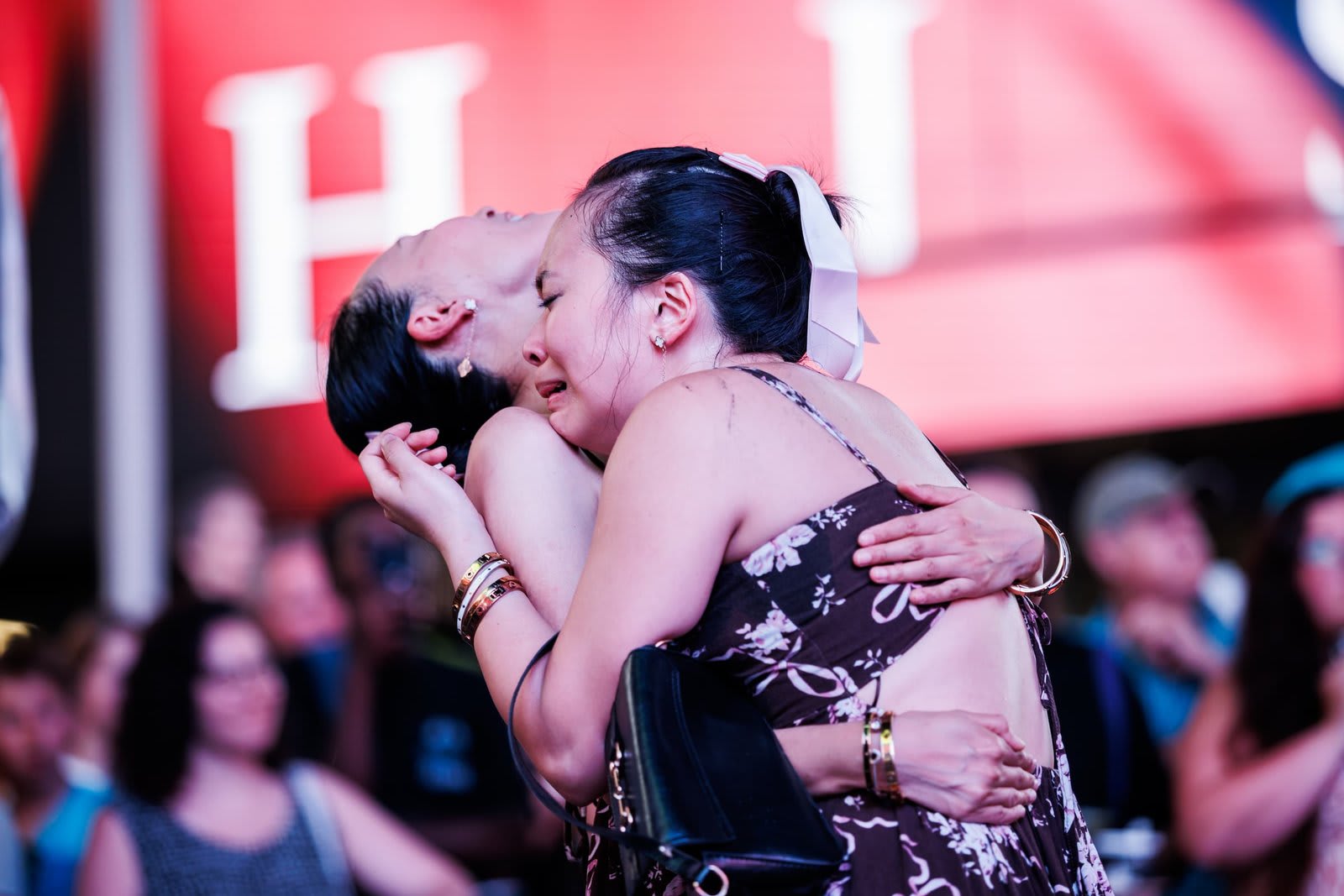
Like guests retreating from a party, the performers reintegrate into the crowd one pair at a time as the piece winds down. What remains is a composition of chaotic debris until an unaffiliated street performer dressed as Spider-Man steps into one of the grids, only to be ushered away by the event staff so an encore can begin.